
Maharishi University of Management
MUM HAWAII
Another World is Possible ● Imagine. Create. Advocate.
Faculty

Lonnie Gamble
Program Director
Lonnie Gamble, BS. EE., PE, Program Director, Professor Gamble is a founding faculty member in MUM’s Sustainable Living department. His expertise includes renewable energy, food and agriculture, sustainable economics and local alternatives to the global economy, permaculture design, and green building. He regularly presents and writes on these issues. Lonnie has founded many for-profit and non-profit sustainability ventures, including Abundance Ecovillage, the Sustainable Living coalition, Big Green Summer, Abundant Planet Radio collective, and five companies in the area of renewal energy and telecommunications. He has been teaching, developing sustainability curriculum, and mentoring students since 1996. He has a degree in Electrical Engineering from North Carolina State University.
Lonnie and his wife live in a straw bale home, where they harvest rain for water supply, get their electricity from solar and wind power, and eat something fresh every day from their extensive gardens. They haven’t paid an electric bill in 20 years.

D. Noelani Kalipi
Kohala Institute
Noelani was born and raised in Hilo, HI. She earned a B.A. in Government and Economics from George Mason University and a Juris Doctor from George Washington University. Previously, Noelani was President of TiLeaf Group, a native advocacy firm. She has also served as Director of Government & Community Relations for First Wind, Democratic Staff Director for the U.S. Senate Committee on Veterans’ Affairs and as Counsel and Military Legislative Assistant to U.S. Senator Daniel K. Akaka in Washington, DC. Noelani serves on the Board of Directors for PBS Hawaii and Hawaii Island United Way and is a member of the Big Island Community Coalition Steering Committee and an Omidyar Fellow. Noelani is grateful for the opportunity to work with such inspiring and diverse team members who are committed to making the world a better place for all. She lives with her husband, Gaylen, and their two daughters, Hau’oli and Ku’uipo.

Dr. Devon Almond
Academic Director
Dr. Devon Almond is fascinated by leading-edge higher education and transformative community development in small towns. As a researching-practitioner, Devon has visited hundreds of American college towns and over 400 college campuses across North America. He has worked in professional, academic, and consulting capacities with several rural and remote-serving post-secondary institutions-- from the Yukon, across Western Canada, and now Hawaii. In addition to serving as the Academic Director for MUM's Hawaii Semester, Devon is an Academic Content Expert (Higher Education in Rural Communities) for PhD students at Grand Canyon University in Arizona. Dr. Almond is particularly interested in utilizing integral theory to cultivate evolutionary mindsets, cultures, and systems in small towns.

Steve Langerud
Program Coordinator
Steve Langerud is a counselor, facilitator and executive coach. He works with people to improve their skills in communication, team-building, leadership, and strategic thinking. He has worked with over 15,000 people to facilitate effective professional development, career and life decisions, and organizational structure. Currently, Steve serves as the principal of Steve Langerud & Associates, LLC.
Langerud is regularly cited for his work on employment and workplace issues by media including Fast Company, "Morning Edition" on National Public Radio, Voice of America, Christian Science Monitor, San Francisco Chronicle, MSNBC, MORE, FOX, NBC, Philadelphia Inquirer, CNN.com, Pittsburgh Post-Gazette, New York Post, CNBC, The National Law Journal, Chicago Tribune, Baltimore Sun, ABA Journal, The New York Times, Kiplinger's Personal Finance, CareerBuilder.com, The Wall Street Journal, U.S. News and World Report, LawCrossing.Com, LawJobs.Com, Monster.Com, and The Des Moines Register. As an author, Steve has contributed work to such publications as Journal of College Student Development, The National Law Journal, LawCrossing.Com, Iowa Commerce, Grinnell Magazine, and Experiential Education

Tracy Matfin
Faculty
Tracy Matfin is an educator turned farmer, mother and permaculture instructor. She is a founding member of La’akea Community, www.permaculture-hawaii.com, where she has been living and experimenting with sustainability for more than ten years. Tracy grew up in the San Francisco bay area in California. She studied enviromental science at U.C. Berkely, and went on to be a high school science teacher for a decade.
Tracy practices what she teaches. Having lived in community since 2005 she understands the need to consciously integrate knowledge of facts with interpersonal communication while allowing space for the ever present emotional components. She is a student of non-violent communication, peer counseling, Huna (a form of Hawaiian spirituality), group facilitation and vipassana meditation. Tracy excels in making education meaningful and retain-able through her use of real life examples and hands on projects. She has been teaching permaculture since 2010. Tracy loves sitting with trees, communing with the “weeds” she is removing from the garden and laughing with her daughter, Aia’ala, friends and family.

Stuart Tanner
Faculty
Professor Tanner is an acclaimed producer and director of documentary films for the BBC, National Geographic, the Discovery Channel, and others. His projects and awards include:
-
Saving The Disposable Ones (2011), a documentary that takes you to the heartbreaking streets of inner city Columbia, where Father Gabriel Mejia, a Catholic priest, is transforming the lives of thousands of children by providing shelter, love and Transcendental Meditation.

Nynke Passi
Faculty
Nynke Passi started teaching at MUM in 1998, first in the former MA in Professional Writing program, then in the undergraduate Literature and Creative Writing program.
“Whether she is teaching poetry, graphic narrative, or memoir writing, Nynke Passi is more than a teacher; she is a mentor, confidante, and muse. With compassion and care, she guides students in expressing their creativity through language—she inspires students to be bold, authentic, and honest.” So writes Anna Maria Cornell, a graduate of MUM’s English program, now doing graduate work in Linguistics and ESL at the University of Iowa.

Appachanda Thimmaiah, Ph.D.
Faculty
Appachanda Thimmaiah, Ph.D. - Dr. Thimmaiah is an expert in climate smart agriculture promoting low-carbon green approaches for rural development. Through constant innovation and research, he has developed many low-cost farming solutions utilizing natural resources which are benefiting thousands of farmers in different countries.
Globally he has played a leading role in the development, coordination, implementation of strategies, programs and policies addressing the issues of food security, climate smart sustainable agriculture, rural poverty reduction, sustainable development, and Gross National Happiness(GNH).
He has advised various international organizations, agri-business corporations, governments and NGO’s in India, Nepal, Bhutan, Sri Lanka, Italy, Holland, and Costa Rica.
In Bhutan he developed the National Organic Standards of Bhutan, zero-cost certification systems, training manuals, strategies and other documents to empower poor farmers and facilitate the nation to be 100% organic and carbon neutral.
Dr. Thimmaiah is also a Board Director of Demeter Association Inc. of US.
John Ikerd
Faculty


Fred Travis Ph.D.
Faculty
Fred Travis, Ph.D. - Dr Travis is an internationally renowned neuroscientist. In a distinguished career that has spanned more than 30 years, Dr Travis has published over 70 scientific papers, many in top peer-reviewed scientific journals, and has given presentations at major international conferences. He is a leading figure in global research into the field of consciousness and the development of consciousness through the Transcendental Meditation technique.

Gerrie Stood
Program Administrator
Gerrie Stood is the owner of Rose Heart Productions, a new age business support company that provides business administration, publishing, marketing and branding support for local businesses with sustainable visions. Gerrie has a BS. In Sustainable Living from Maharishi University of Management and is passionate about sustainable food policies and sustainablity as a core curriculum for all students. She lives in Fairfield, IA with her 2 daughters.

Clem Soga
Faculty
Clement T. Soga is the Principle and Founder of Soga + Associates Architects Inc with a wide range of projects including single & multi-family residential development, hotels, casinos, restaurants, sports complexes, airports, religious facilities, college campus development, Native American Tribal projects.
Collaborative Partner with Kohala Institute. Kohala Institute at ‘Iole (KI) manages approximately 2,400 acres of land, including the ‘Iole ahupuaa, in North Kohala on the Island of Hawaii

Jay Harman
Faculty
Described as a “visionary” and “futurist” by the Science Channel, Jay’s expertise couldn’t be more timely. An award-winning entrepreneur and biomimetic inventor, Jay Harman has taken a hands-on approach to his lifelong fascination with the deep patterns found in nature. In the process, he has founded and grown multi-million-dollar research and manufacturing companies that develop, patent, and license innovative products, ranging from prize-winning watercraft to interlocking building bricks, afterburners for aircraft engines, and non-invasive technology for measuring blood glucose and other electrolytes. He is credited with being among the first pioneering scientists to make biomimicry—the science of employing nature in advancing sustainable technology—a cornerstone of modern and future engineering. His latest ventures—PAX Scientific, PAX Water Technologies, PAX Mixer, and PAX Streamline—design more efficient industrial equipment including refrigeration, turbines, fans, mixers, and pumps based on Jay’s revolutionary concepts.

Art Whatley
Faculty
Art A. Whatley, Ph.D. is Professor of Management and Sustainable Development and Program Chair for the Master of Arts/Global Leadership and Sustainable Development, Department of Social Sciences, College of Humanities and Social Sciences, Hawaii Pacific University in Honolulu, Hawaii. Previously he was Professor of Management in the College of Business and Economics, New Mexico State University, Las Cruces, New Mexico.
He has held positions at numerous other institutions including: the East West Center and the College of Business, University of Hawaii; the Helsinki School of Economics at both the Helsinki and Mikkeli campuses, Southern Cross University, Saybrook Graduate School, and the University of Primorska in Slovenia.
In 2006, he was a recipient of a Fulbright Senior Specialist grant hosted by the Faculty of Management (FOM), University of Primorska, Koper, Slovenia to explore ways to bring sustainability into the curriculum and to help design sustainability into the FOM-sponsored Management International Conference (MIC). A second Fulbright Senior Specialist grant was received in 2009 to return to the Faculty of Management to teach and collaborate on research projects. He joined the Editorial Board of the International Journal of Sustainable Economy in 2007 at the request of FOM. He has served on the MIC Program Board since 2008. He will be giving a keynote speech at the MIC,2001 event.
His current work involves moving sustainability into undergraduate and graduate curricula, with emphasis on management education, and across the physical dimensions of the campus. In 2010 he received funding to hire Hawaii Pacific University’s first Campus Sustainability Coordinator, a position created to promote sustainability in every dimension of university life. He is one of two faculty members to serve as liaison on behalf of HPU’s membership in the Association for the Advancement of Sustainability in Higher Education (AASHE), a network of over one thousand universities world wide committed to campus sustainability
Guest Faculty and Lecturers
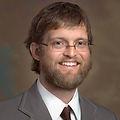
Travis Cox, Ph.D
Guest Faculty
Travis Cox’s research is about the intersection of social movements, education, metaphysics, environmental philosophy, and agriculture. Travis is excited to teach and explore these disparate, esoteric themes at MUM — where consciousness, the environment, and their relationship are taken seriously.
He earned a Ph.D. from Iowa State University and Master’s in Philosophy and Religion — with an emphasis in Philosophy, Cosmology, and Consciousness — from the California Institute of Integral Studies in San Francisco. He has a Bachelor’s in Philosophy from Central College in Pella, Iowa.

Jim Fullmer
Guest Faculty
Jim Fullmer has been Executive Director of Demeter, Inc. since 2004. Graduating with a B.S. in Horticulture from Oregon State University, Jim has been a hands-on Biodynamic® farmer for 25 years and currently resides with his family on their Demeter Certified Biodynamic farm, the Hoskins Berry Farm, in Kings Valley Oregon. Jim brings a wealth of experience as a previous consultant for both Biodynamic and organic farming and processing operations, along with multiple years engaged as an independent Organic inspector and consultant. This has placed Jim at the forefront of the industry, working with the original organic certifiers in the US, as well as numerous well-established certifiers throughout the world. Jim’s global immersion into organic and Biodynamic agriculture has taken him on travels beyond the USA and Europe, including Indonesia, China, Russia, Mexico, and Central America.
John Ikerd
Faculty
John Ikerd Ph.D.
Guest Faculty
John E. Ikerd, PhD, is Professor Emeritus of Agricultural Economics, University of Missouri Columbia. He writes and speaks out on issues related to sustainable agriculture with an emphasis on the economics of sustainability.
He was educated at the University of Missouri with BS, MS, and PhD degrees in Agricultural Economics.John has become a leading figure in the sustainability revolution—one who is capable of deep insights but also has the capacity to engage everyone in the conversation and work. He has found himself at the edge of what is possible in the discipline and has turned his efforts to using his voice and position to advocate for radical change and to help others to both understand this necessity and to be able to advocate for themselves.
In 2014, John as asked by the Food and Agriculture Organization of the United Nations to develop the North American report for the International Year of the Family farm. In his report, he makes the case for multifunctional farms of the future that protect and renew natural ecosystem and create and nurture caring communities as they provide economic livelihoods for farm families. Should we make it through this great transition facing humanity in the 21st century, it will be in, in part, thanks to John, his thinking, his engagement, and his work.

John Ikerd
Faculty

Ved Nanda Ph.D.
Guest Faculty
Professor Nanda has taught at the University of Denver since 1965. In addition to his scholarly achievements, he is significantly involved in the global international law community. He is Past President of the World Jurist Association and now its Honorary President, former honorary Vice President of the American Society of International Law and now its counselor, and a member of the advisory council of the United States Institute of Human Rights. He was formerly the United States Delegate to the World Federation of the United Nations Associations, Geneva, and Vice-Chair of its Executive Council, and also served on the Board of Directors of the United Nations Association-USA. He also serves as an elected member of the American Law Institute and as a council member for the American Bar Association Section of International Law.
In 2006 Professor Nanda was honored with a $1 million founding gift from DU alumni Doug and Mary Scrivner to launch the Ved Nanda Center for International and Comparative Law. The Center began its programming in 2007, hosting programs for the lawyers, students and community participants as well as promoting scholarship in the field of international law.
In February 2004, Professor Nanda was awarded the “Gandhi, King, Ikeda Award for Community Peace Building” from Soka Gakkai International and Morehouse College. In 1990 in Beijing, China, Professor Nanda was presented with the “World Legal Scholar” award by the World Jurist Association. He was also the recipient of the United Nations Association Human Rights Award in 1997. He has received honorary doctorates from Soka University in Tokyo, Japan and from Bundelkhand University, Jhansi, India. He is widely published in law journals and national magazines, has authored or co-authored 22 books in the various fields of international law and over 180 chapters and major law review articles, and has been a Distinguished Visiting Professor and Scholar at a number of universities in the United States and abroad.
Featured Publications
-
“Sustainable Development,” Chapter 6, International Energy and Poverty: Emerging Contours (Routledge) (forthcoming fall 2015).
-
Our World to Make: Hinduism, Buddhism, and the Rise of Global Civil Society co-authored with Daisaku Ikeda, (Dialogue Path Press) (September 2015).
-
Global Environmental Governance and the South (Cambridge University Press) (September 2015).
-
The Law of Transnational Business Transactions co-authored with Ralph Lake), (Thomson Reuters) (spring 2014).
-
Litigation of International Disputes in U.S. Courts co-authored with David Pansius, (Thomson Reuters) (spring 2014).

Marie Alohalani Brown, Ph.D.
Guest Faculty
Marie Ahoahini Brown specializes in Hawaiʻi-related Literature of the Hawaiian Kingdom and Territorial Era (1810-1959), Hawaiian and other Polynesian Religions, Translation (Theory and Practice), Folklore Studies, and Indigenous Theories and Methodologies. Dissertation: “Facing the Spear of Change: The Life and Legacy of Ioane Kaneiakama Papa ʻĪʻī.” John Papa ʻĪʻī was an important figure in 19thcentury Hawaiʻi, and his life narrative provides the context for a deeper understanding of Hawaiian history, culture, and religion, and provides a point of departure for future discussions on the same. Religion is one of the key threads that form the fabric of ʻĪʻī’s existence, and this biography lays the foundation for future analysis on the Kapu System before and after its official abolishment in 1819, and how 19th-century Hawaiians negotiated the transition from Hoʻomana Hawaiʻi to Christianity—or conversely—how certain others continued to practice Hoʻomana Hawaiʻi, and kept beliefs and belief-related practices alive.
She currently teaches at the University of Hawai'i Manoa. You can read more about her here.
John Ikerd
Faculty

Jerry Konanui, LPM
Guest Faculty
Jerry Konanui is a Native Hawaiian Mahi‘ai (farmer) (he’s much more than this - Lonnie) who gathers, grows, maintains and provides the many varieties of Hawaiian food crops. As a resource person he is called upon to provide hands on workshops on identification of Hawaiian food plants, their varieties, their propagation, cultivation, harvesting, processing and use throughout the Islands.
When Native Hawaiians are having problems with their kalo crops, they go to one of Konanui’s workshops or invite him to their farms. Konanui can rattle off kalo’s parts and varieties, nutrients and parasites with equal fluency in both scientific nomenclature and in Hawaiian. Talk to him for a few minutes and he may touch on any number of projects he’s involved in: a garden plot at Pu‘uhonua o Honaunau National Historical Park, a field guide for identifying kalo cultivars, a program called Hanai kï Kalo designed to keep traditional kalo strains alive. When it comes to kalo, Konanui is The Authority.
John Ikerd
Faculty

Ashley Lukens
Guest Faculty
Ashley Lukens is the Hawaii Program Director for the Center for Food Safety. Her work focuses on issues of human and environmental health as they relate to the food system. She has her PhD in Political Science from the University of Hawaii at Manoa, where her research examined community-led efforts to develop culturally appropriate strategies for food system transformation. During grad school, she was also a Sea Grant Graduate Trainee, working at Kakoo Oiwi to document the impact of shifting land use practices in He‘eia wetland and the community-led efforts develop culturally appropriate ecosystem management strategies. Originally from Houston, TX Ashley attended Vassar College where she graduated with a B.A. in women studies and economics.
From 2008 until 2012, Ashley was co-owner of Baby Awearness, a natural parenting and eco-friendly baby store in Mānoa Valley, a labor of love born from her passion to inform and empower mothers to make choices that are good for their children, their communities and the Earth. Ashley is a founding member and the former Vice President of the Hawaii Food Policy Council, a member of the Sierra Club’s National Food Policy Task Force, and continues to teach Political Science courses at UH Manoa and UH West Oahu. Ashley is also the mother to 5 year old daughter.

Craig Pearson, Ph.D.
Faculty
Craig Pearson is vice-president of academic affairs at Maharishi University of Management.
He is the author of The Supreme Awakening: Experiences of Enlightenment Throughout Time — and How You Can Cultivate Them.
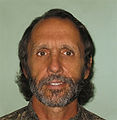
Ramdas Lamb, Ph.D.
Guest Faculty
Ramdas Lamb is currently on sabbatical. He teaches introductory religion courses as well as courses dealing with contemporary religion and society, fieldwork, and mysticism. The focus of his current research is on monastic traditions and religion among the low castes in central and northern India. He was a Hindu sadhu (monk) in north India from 1969 until 1978.

Steve Druker
Guest Lecturer
Steven M. Druker is a public interest attorney who founded the Alliance for Bio-Integrity, a non-profit organization dedicated to promoting technologies that foster human and environmental health and addressing the problems of those that do not. As executive director of the Alliance, he organized a lawsuit against the U.S. Food and Drug Administration (FDA) that forced it to divulge its files on genetically engineered (GE) foods. This revealed that politically appointed administrators had covered up the extensive warnings of their own scientists about the unusual risks of these foods, lied about the facts, and then ushered these novel products onto the market in violation of explicit mandates of federal food safety law. In organizing the suit, he assembled an unprecedented coalition of eminent scientists and religious leaders to stand with the Alliance as co-plaintiffs – the first time scientists had sued a federal administrative agency on the grounds that one of its policies is scientifically unsound.
He is a prominent commentator on the risks of GE foods, has been featured in numerous articles in newspapers and magazines on five continents, and has appeared on many nationally broadcast television and radio programs (such as NPR’s The Connection and The Cleveland City Club; various BBC interviews; and Australia’s equivalent of The Today Show). He’s been a featured speaker at symposia at the British House of Commons and the National Congress of Brazil and at press conferences sponsored by the Brazilian Medical Association, the Swedish Consumers Association, and concerned members of the European Parliament.
He has served on the food safety panels at conferences conducted by the National Research Council and the FDA; given lectures at numerous universities (including the Biological Laboratories at Harvard, Tel Aviv University, and the University of Copenhagen); and met with government officials world-wide, including the UK’s Environmental Minister and the heads of food safety for France, Ireland, and Australia. He also conferred at the White House Executive Offices with an interagency task force of the President’s Council on Environmental Quality.
On invitation, he published articles about GE food in The Congressional Quarterly Researcher; I, a leading ecological magazine in New Zealand; and The Parliament Magazine, an influential Brussels-based journal covering EU policy issues. In May 2004, The Financial Times published his comment on GE food and the deceptions of the U.S. government.
He has extensive academic background in the history and philosophy of science and in human development and ethics – and has lectured extensively in these fields at universities and for professional groups, including presentations at the Center for Moral Development at the Harvard Graduate School of Education, the Rensselaer Polytechnic Institute, and an institute of the American Bar Association. He co-authored the introductory and final chapters of Higher Stages of Human Development, published by Oxford University Press, and wrote a chapter on ethical development for Transcendence and Mature Thought in Adulthood, published by Rowman and Littlefield.
He majored in philosophy at the University of California, Berkeley, received a special award for “Outstanding Accomplishment” in that field, was elected to Phi Beta Kappa in his junior year, and graduated with “Great Distinction in General Scholarship.” He also received his Juris Doctor from U.C. Berkeley and was elected to both the Law Review and the Order of the Coif (the legal honor society).
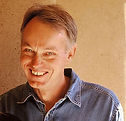
Robert Laporte
Guest Faculty
Robert is a recognized natural building pioneer, teacher and author. He is a leading expert in earth, clay/straw and timber frame construction. Robert has been designing and building natural homes for the past thirty years in Canada and the United States and has lead more than 1,500 students in over 100 workshops in 6 countries. Since researching natural building in Europe in 1990 he has become a leading proponent of light clay construction and his innovative development of an energy-efficient straw clay enclosure system has set the standard for light clay construction in North America.

Patty Cantrell
Guest Faculty
Patty Cantrell researches, writes, and speaks nationally about local food as community economic development. She also offers strategic communications, facilitation and project development through her business Regional Food Solutions LLC. She is trained in the WealthWorks value chain approach to community economic development and a co-author of the seminal USDA publication Food Value Chains: Creating Shared Value to Enhance Marketing Success.
Current writing includes Good Food Economy Digest blogs for the Wallace Center at Winrock International, home of the National Good Food Network. Other recent work includes Food Innovation Districts: An Economic Gardening Tool, which won a 2013 Innovation Award from the National Association of Development Organizations, and Food Hubs: Solving Local, a report for the Wallace Center on wholesale regional food marketing. In 2012, Patty brought her food system insights and expertise to the TEDx Manhattan stage.
Earlier in her career, Patty spent 12 years developing and leading regional food economy programs in Michigan, including the 10-county northwest Michigan Taste the Local Difference and Food and Farming Network initiatives. She served on the Michigan Food Policy Council and chaired the Michigan Good Food Charter infrastructure task force. Patty worked on national policy and communications initiatives in 2007-2009 as a Kellogg Food and Society Fellow.
She holds a masters degree in business administration from Drury University and bachelors’ degrees in economics and political science from the University of Missouri-Columbia. Her background includes a Fulbright Scholarship to study economic systems in Europe, and newspaper and magazine work as a business journalist.

Dan Chiras
Guest Faculty
Dan Chiras, Ph.D. is an internationally renowned author and expert on green building and renewable energy. Dan teaches workshops on solar electricity, wind energy, passive solar design, energy efficiency, green building, natural building, and electric car conversion. Dan is founder and Director of The Evergreen Institute and President of the consulting firm, Sustainable Systems Design, Inc.
Dan has published more than 30 books and over 300 articles on green building, residential renewable energy, energy efficiency, and sustainability. He has taught courses on renewable energy at the college level for over 30 years and taught numerous workshops on passive solar design, green building, and renewable energy through the the Continuing Education program at the University of Colorado, American Solar Energy Society, the Midwest Renewable Energy Association, the Colorado Strawbale Association, and the Colorado Renewable Energy Society.
Dan consults to builders, homeowners, architects, and developers on green building and renewable energy and has worked on projects throughout Canada, the United States, and Central America.

Keith Wallace, Ph.D.
Faculty
ROBERT KEITH WALLACE is a pioneering researcher on the physiology of xe "consciousness"consciousness. His work has inspired hundreds of studies on the benefits of xe "meditation"meditation and other xe "mind"xe "mind"mind-body techniques. Dr. Wallace’s findings have been published in Science, American Journal of Physiology, and Scientific American. He received his BS in physics and his PhD in physiology from UCLA, and he conducted postgraduate research at Harvard University. As the founding president of xe "Maharishi University of Management"xe "Maharishi"Maharishi University of Management (MUM) in Fairfield, Iowa, Dr. Wallace is currently Co-Dean of the College of Perfect Health, Professor and Chairman of the Department of Physiology and Health, and a Trustee of MUM.
Books by Dr. Wallace include: Transcendental Meditation: A Scientist’s Journey to Happiness, Health, and Peace; Maharishi Ayurveda and Vedic Technology: Creating Ideal Health for the Individual and World; The Neurophysiology of Enlightenment: How the Transcendental Meditation and TM-Sidhi Program Transform the Functioning of the Human Body; Dharma Health and Beauty: A User-Friendly Introduction to Ayurveda (with Samantha Wallace); An Introduction to Transcendental Meditation: Improve Your Brain Functioning, Create Ideal Health, and Gain Enlightenment Naturally, Easily, Effortlessly (with Lincoln Norton); and Dharma Parenting: Understand Your Child's Brilliant Brain for Greater Happiness, Health, Success, and Fulfillment (with Fred Travis).

Roald Gunderson
Guest Faculty
Roald Gundersen, has devoted the better part of the last twenty five years exploring and experimenting with natural building and the architecture of small-diameter round timber. He is a founding partner and principal of WholeTrees Architecture & Structures, a Design/Build and Forestry firm in southwestern Wisconsin which has distinguished itself as a leader in sustainable design and natural building. Gundersen has designed and built small-diameter round timber and branching column assemblies into structures ranging from passive solar greenhouses, residences, eco-tour- ism resort, restaurants, educational facilities and of fi ce buildings.
Gundersen received his Bachelor of Architecture and a BS in Environmental Design from the University of Minnesota in 1984. For three years he worked as a project designer on the restora- tion of a hundred year-old timber and masonry cathedral in San Jose, CA. He worked as a project architect for three years on the Human Habitat portion of the Biosphere 2 in Arizona. This focused his architecture on integrating living systems into buildings for food production, waste, air and wa- ter treatment. Travel to Central America focused his architecture on the practical and environmen- tal importance of using naturally abundant local materials. A 1992 Solar greenhouse he designed for Badgersett Research Farm, grows tomatoes through winter without added heat in-puts.
Since returning to his native Wisconsin in 1993, Gundersen has taken a hands-on-learning ap- proach to architecture and materials, literally building projects from abundant, farm-based local and low energy materials. His home used Aspen poles from an oak release and was the fi rst of its
kind to use straw bales as roof insulation. This structure, and some seventy others natural buildings since, has made him a leader in the uses of straw bale and small-diameter round timber architecture. Inspired by the wisdom of the 134 acres of forests he stewards near La Crosse, WI. Gundersen has used branching and wind-bent curved timbers in many of buildings to add lateral support. His vertically integrated firm employs forest management, architectural design, timber manufacturing and construction professionals.
Gundersen has been involved with the USDA Forest Products Lab and has partnered in coordinating a symposium on small-diameter round timber use in buildings in 2006. They have since pursued avenues of further partnership and analysis in the SDRT fi eld. In 2011, he was the Principal Investigator on a $100,000 USDA SBIR Phase I grant. With a 2007 USDA Value Added Producer Grant, Gundersen is pioneering in situ small-diameter round timber processing, and Standing Timber Inventory Systems. He continues development of structural tree sculpting where trees are bent and shaped while living into specific structural components for later harvest and building.
Find out more about Roald and his work at wholetrees.com

Paula Baker-Laporte, FAIA
Guest Faculty
Hailed by Natural Home Magazine in 2005 as one of the top 10 green architects in the U.S., Paula leads the EcoNest design team. Paula graduated from the University of Toronto, School of Architecture in 1978 and from The International Institute of Bau-Biologie and Ecology in 1995. In 2007, she was elected into the College of Fellows of the American Institute of Architects. She headed a wide-ranging architectural practice based in Santa Fe, New Mexico since 1986. Since 1992, Paula has dedicated her practice to the precepts of environmentally sound and health enhancing architecture and her firm continues to lead in the fields of healthy and natural design and design and consultation for the chemically sensitive. She has been the principal architect at EcoNest Architecture in Ashland, Oregon since 2010.
Paula has lectured, taught and published extensively on the topic of healthy and ecological design. She is currently developing and teaching courses for the International Institute of Bau-biologie and Ecology. She is the primary author of Prescriptions for a Healthy House. She is a contributing author to several books.
Learn more about Paula’s Design and Consulting Work at her EcoNest Architecture website.


 |  |
|---|---|
 |  |
 |  |